

Netflix premiered the documentary “Elway” on December 22, 2025, according to Netflix’s official announcement. The feature-length film examines Pro Football Hall of Fame quarterback John Elway’s career from Stanford University through his 16-season tenure with the Denver Broncos, concluding with back-to-back Super Bowl victories in 1998 and 1999.
Directors Ken Rodgers and Chris Weaver helmed the project, with executive producers including Peyton Manning through Omaha Productions. Director Rodgers stated: “John Elway’s career isn’t just iconic—it’s darn near mythological. His physical abilities, mental toughness, and raw determination are the stuff of legend.”
The documentary premiered at the Denver Film Festival on November 8, 2025, before its global Netflix release. According to What’s on Netflix, the film runs 1 hour and 39 minutes and carries a TV-14 rating. The documentary emphasizes personal storytelling, with Elway narrating his experiences throughout.
According to 9NEWS Denver, the film examines devastating personal losses, including the deaths of his twin sister and father within 18 months, and his divorce, providing unprecedented access to Elway’s emotional experiences.
Stanford Career: Foundation of Excellence
John Elway’s college career at Stanford University established him as one of the most talented quarterbacks in collegiate history. According to Encyclopedia.com, Elway completed 774 passes out of 1,246 attempts over four years for 9,349 yards and 77 touchdowns. He set an NCAA record for lowest interception percentage and finished second to Herschel Walker in 1982 Heisman Trophy balloting.
Elway’s sophomore season in 1980 represented his collegiate pinnacle. He completed 248 of 379 passes—a 65 percent completion rate—for 2,889 yards and 27 touchdowns, ranking second in the NCAA. This performance established Elway as the nation’s premier quarterback prospect.
The Stanford Cardinal struggled with losing records during Elway’s tenure, but his individual excellence transcended team performance. His senior season in 1982 featured one of college football’s most memorable moments. With Stanford trailing California 19-17 with two minutes remaining and facing 4th-and-17 on their own 13-yard line in “The Big Game,” Elway orchestrated a dramatic game-winning drive.
Elway’s multi-sport talent complicated his professional future. According to Britannica, the New York Yankees drafted him in the first round of Major League Baseball’s 1981 draft, and he played for a Yankees farm club during summer 1981. The Kansas City Royals had previously drafted Elway in 1979 while in high school. This baseball prowess provided leverage during NFL negotiations.
NFL Draft Drama and Denver Arrival
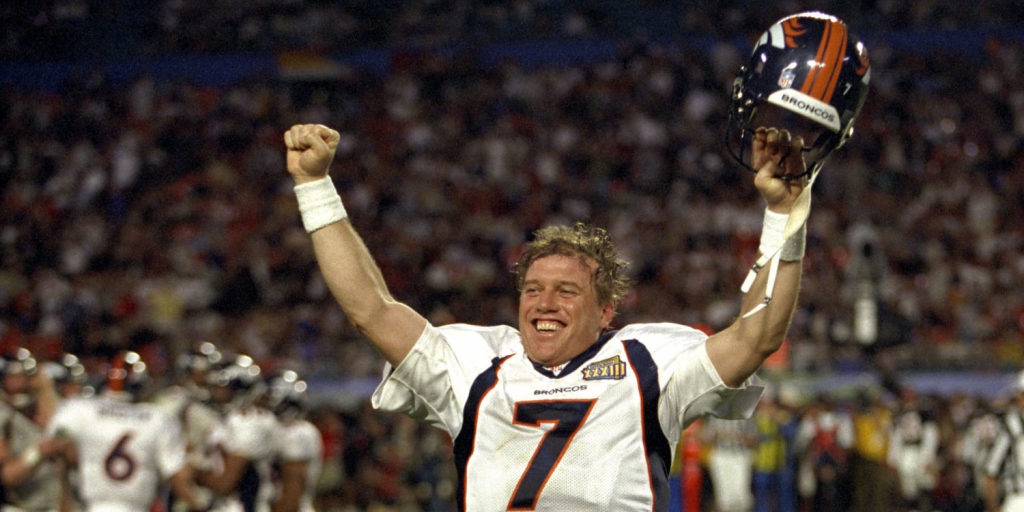
John Elway became the first overall selection in the 1983 NFL Draft by the Baltimore Colts. However, according to Pro Football Hall of Fame, Elway refused to play for the struggling Colts organization and threatened to pursue professional baseball if not traded.
On May 2, 1983, the Colts traded Elway to the Denver Broncos in exchange for quarterback Mark Herrmann, offensive lineman Chris Hinton, and a first-round pick in the 1984 draft. This transaction allowed Elway to play in his preferred location and provided the Broncos with a franchise quarterback.
Elway’s rookie season in 1983 proved challenging despite leading the team to a 9-7 record. However, his exceptional arm strength—capable of throwing 80-yard passes—immediately established him as one of the league’s most feared quarterbacks.
The documentary examines the pressure accompanying Elway’s arrival in Denver as the most heralded college quarterback prospect in a generation, exploring how scrutiny affected his development and personal life.
The Drive and Championship Pursuit
The Drive represents John Elway’s most iconic moment. On January 11, 1987, in the AFC Championship Game against Cleveland, Elway engineered a legendary 98-yard touchdown drive in the final minutes, tying the game and sending it to overtime where Denver prevailed 23-20. According to NFL.com, this performance epitomized Elway’s reputation for fourth-quarter comebacks.
Elway’s early Super Bowl appearances resulted in defeats. He led the Broncos to Super Bowl XXI (1987), XXII (1988), and XXIV (1990), losing all three by an average margin of 32 points to the New York Giants, Washington Redskins, and San Francisco 49ers respectively.
The 1998 season brought championship redemption. In Super Bowl XXXII at age 37, Elway led the Broncos to a 31-24 victory over defending champion Green Bay. According to Britannica, despite completing only 11 of 22 passes, Elway’s leadership and memorable helicopter spin run symbolized his determination.
The following season brought greater triumph. In Super Bowl XXXIII on January 31, 1999, Elway passed for 336 yards and one touchdown in a 34-19 victory over Atlanta, earning Super Bowl MVP honors. He retired immediately following this victory at age 38.
Personal Vulnerability and Documentary Revelations
The “Elway” documentary distinguishes itself through unprecedented personal revelations. According to Denver Gazette, director Ken Rodgers challenged Elway to display vulnerability, something antithetical to championship football culture where vulnerability equates to weakness.
Elway’s personal tragedies receive substantial attention. Within 18 months, he experienced the deaths of his twin sister Jana and his father Jack Elway. The film shows Elway discussing these losses with complete emotional transparency, revealing grief he never publicly displayed during his career.
The dissolution of his marriage to Janet Elway after 18 years also features prominently. The documentary examines how public figures navigate personal crises while maintaining professional responsibilities.
The film’s bookend scenes show Elway at his Idaho vacation home with his extended family, presenting him as “Poppi”—a 65-year-old retired father of four and grandfather of ten. This portrayal contrasts with his public persona as the competitive “Duke of Denver.”
According to Axios Denver, Elway acknowledged the challenge, stating: “He told me I would have to be vulnerable. That’s something that does not compute with championship-caliber football players.”
Career Statistics and Hall of Fame Legacy
John Elway’s statistical achievements secured his place among football’s all-time greats. According to Pro Football Hall of Fame, he retired with 51,475 passing yards, ranking second all-time behind Dan Marino. His 300 career touchdown passes placed him third all-time, while his 148 victories as starting quarterback represented the most in NFL history at retirement in 1999.
Elway’s rushing ability distinguished him from typical pocket passers. He accumulated 3,407 rushing yards and 33 rushing touchdowns, becoming the only player in NFL history to pass for over 3,000 yards and rush for over 200 yards in the same season for seven consecutive years (1985-1991). According to Colorado Sports Hall of Fame, he was responsible for 334 total touchdowns, generating 82.2% of all points scored by the Broncos during his tenure.
Fourth-quarter comebacks defined Elway’s legacy. He engineered 47 game-winning or game-tying drives in the fourth quarter and overtime. His ability to perform under pressure became legendary.
Elway’s post-playing career added to his legend. As Denver Broncos General Manager and Executive Vice President of Football Operations from 2011-2021, he constructed the team that won Super Bowl 50 following the 2015 season, giving him three total Super Bowl rings—two as player and one as executive.
Elway was inducted into the Pro Football Hall of Fame in 2004 on the first ballot. His number 7 jersey was retired by the Denver Broncos on September 13, 1999.
John Elway Career Milestones
| Category | Achievement | Details |
|---|---|---|
| College | Stanford Cardinal QB (1979-1982) | 9,349 passing yards, 77 TDs, NCAA interception record |
| Draft | 1st Overall (1983) | Drafted by Baltimore Colts, traded to Denver Broncos |
| Regular Season | 148-82-1 Record | Most QB wins at retirement |
| Passing Stats | 51,475 yards, 300 TDs | 2nd all-time in yards at retirement |
| Super Bowls | 5 appearances, 2 wins | XXXII (1998), XXXIII (1999 MVP) |
| Pro Bowls | 9 selections | Franchise record for Denver Broncos |
| Awards | 1987 NFL MVP | Also 1992 Walter Payton Man of the Year |
| Hall of Fame | Inducted 2004 | First ballot selection |
| Executive | Super Bowl 50 Win (2016) | GM/EVP during championship |
Sources: Pro Football Hall of Fame, Wikipedia
Production Team and Critical Reception
The “Elway” documentary benefits from exceptional production talent. Executive producer Peyton Manning brought unique perspective as a legendary quarterback with Denver connections who led the Broncos to Super Bowl 50 victory in 2016.
Skydance Sports partnered with Netflix on production, continuing their collaboration on sports documentaries including “Aaron Rodgers: Enigma.” Directors Ken Rodgers and Chris Weaver employed chronological narrative structure tracing Elway’s growth from college athlete to NFL legend.
The documentary’s cinematography blends archival footage from Elway’s playing career with contemporary interviews filmed at his Idaho estate. ESPN analyst Adam Schefter provides expert commentary on Elway’s influence on the NFL.
The Denver Film Festival premiere on November 8, 2025, generated enthusiastic response. According to Denver Gazette, fans attended in Broncos gear, creating celebration atmosphere with cheers for career highlights.
The documentary’s emotional depth surprised longtime Elway observers. His willingness to display vulnerability and discuss personal tragedies represented dramatic departure from his carefully maintained public persona during his playing career.
Conclusion: Definitive Portrait of Football Excellence
Netflix’s “Elway” documentary successfully presents a comprehensive portrait of one of football’s most accomplished quarterbacks. By combining career highlights with unprecedented personal revelations, the film transcends typical sports documentary conventions to examine what championship pursuit costs athletes personally.
John Elway’s legacy extends beyond statistics and championships to encompass his influence on quarterback play, his role in establishing Denver as premier football market, and his demonstration that redemption remains possible regardless of previous failures. The documentary ensures new generations understand his significance while providing longtime fans deeper appreciation for the man behind the legend.