

Sylvester Stallone has revealed one of his biggest filmmaking regrets: cutting a crucial scene from the original “First Blood” (1982) that would have fundamentally changed how audiences understood the conflict at the heart of the film. The deleted scene revealed that Sheriff Will Teasle, played by Brian Dennehy, was himself a traumatized Korean War veteran—making the central conflict not simply law enforcement versus a troubled Vietnam vet, but a tragic clash between two war-damaged men who couldn’t recognize their shared trauma.
According to Stallone, this missing context would have added profound depth to the story, transforming it from an action thriller into a more nuanced exploration of how war follows veterans home and destroys their ability to connect with fellow survivors. The revelation has sparked renewed interest in “First Blood” and discussions about how PTSD affects veterans across generations, while highlighting the sometimes-painful decisions filmmakers face in the editing room.

The Scene That Changed Everything
In recent interviews documented by The Hollywood Reporter and Variety, Sylvester Stallone discussed his regret over cutting a pivotal scene from “First Blood.” The deleted sequence established that Sheriff Will Teasle was a Korean War veteran dealing with his own unprocessed trauma.
According to Stallone, the scene showed Teasle’s military background through subtle visual cues—war memorabilia in his office, a telling conversation, or flashback moments that paralleled Rambo’s Vietnam experiences. This context reframed the entire film’s conflict.
What the Scene Revealed
The deleted material established that both men were:
- Combat veterans from different wars
- Suffering from unprocessed wartime trauma
- Unable to recognize their shared experiences
- Lashing out due to psychological wounds
- Victims of a society unprepared to help returning soldiers
According to Empire Magazine, this parallel structure would have transformed “First Blood” from straightforward action film into a tragedy about damaged men failing to connect despite their common ground.
Why It Was Cut
Studio Pressure and Pacing Concerns
According to Stallone’s account in GQ, several factors led to the scene’s removal:
Pacing concerns: Studios worried additional backstory would slow the film’s momentum
Runtime restrictions: Theaters preferred shorter films for more daily showings
Genre expectations: Action audiences supposedly wanted excitement, not character depth
Testing feedback: Early screenings suggested some audiences found it too complex
Clarity issues: Executives worried dual veteran storylines would confuse viewers
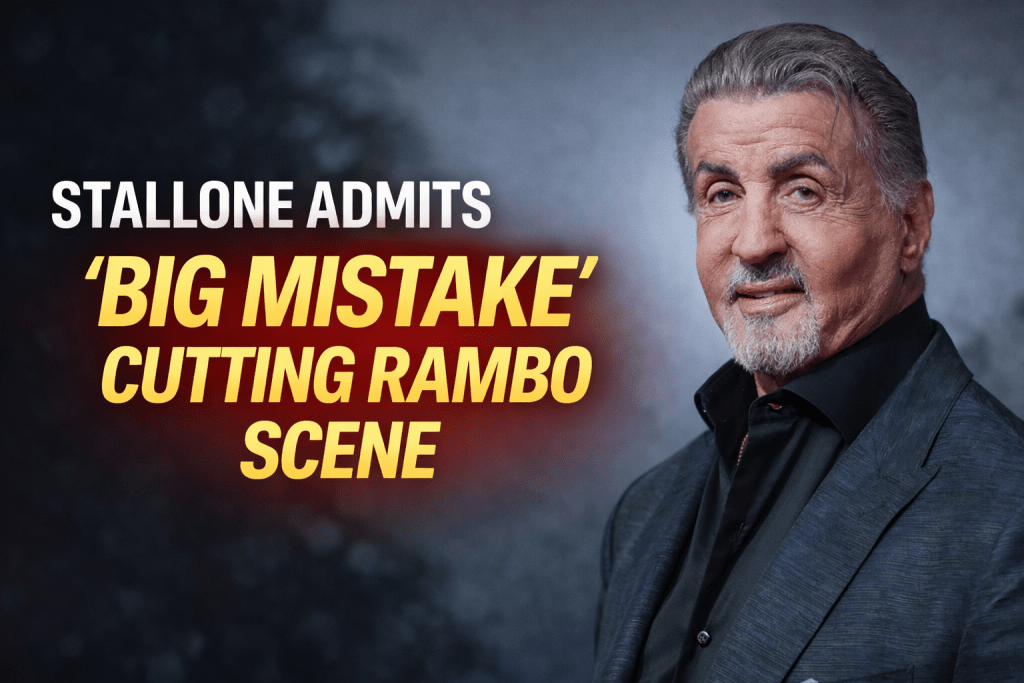
Stallone admits he yielded to these pressures despite believing the scene was essential, calling it a “big mistake” in hindsight.
The 1980s Filmmaking Context
According to film historians cited by IndieWire, 1980s action films rarely explored psychological complexity. Vietnam War films were still controversial, and studios preferred clear heroes and villains over morally ambiguous characters.
“First Blood” was already pushing boundaries by depicting a sympathetic Vietnam veteran. Adding a second traumatized veteran as the antagonist may have seemed too risky for the commercial marketplace.
How It Changes the Film’s Meaning
The Surface Story vs. Deeper Truth
As released, “First Blood” presents this narrative:
| Surface Reading | With Deleted Scene Context |
|---|---|
| Rambo = troubled veteran | Rambo = traumatized veteran |
| Teasle = small-town bully | Teasle = traumatized veteran |
| Conflict = authority vs. outsider | Conflict = trauma vs. trauma |
| Theme = one man against the system | Theme = war’s lasting psychological damage |
| Resolution = Rambo’s breakdown | Resolution = mutual tragedy of unrecognized shared pain |
According to film critics at Rolling Stone, the deleted scene transforms the film from individual story to systemic commentary on how America failed multiple generations of veterans.
The Tragedy of Missed Connection
With Teasle’s veteran background, key scenes gain devastating new meaning:
Initial confrontation: Two traumatized men immediately antagonistic, unable to recognize kinship
Escalating violence: Each triggering the other’s combat conditioning and survival instincts
Final breakdown: Rambo’s emotional collapse witnessed by someone who could have understood but didn’t
According to The Guardian, this reframing makes “First Blood” a story about isolation—veterans unable to connect even with others who share their experiences.
Impact on Rambo’s Character Arc
A More Complex Hero
According to Entertainment Weekly, establishing Teasle as a fellow veteran would have complicated Rambo’s heroic status. He’s not fighting against ignorant civilians but against someone who should understand him—making his violent response more tragic than triumphant.
Rambo’s famous final monologue about Vietnam and coming home would resonate differently knowing Teasle also came home from war to indifference and hostility—just from a different conflict in a different era.
PTSD Across Generations
The deleted scene would have highlighted how different wars create similar trauma. According to veterans’ advocates cited by Military Times, Korean War veterans faced many challenges as Vietnam vets—lack of recognition, inadequate mental health support, and societal pressure to “just move on.”
Parallels between conflicts:
- Both wars controversial and politically complex
- Both veteran populations received inadequate homecoming support
- Both groups faced stigma around mental health struggles
- Both experienced government failure to address PTSD
- Both felt abandoned by the country they served
Modern Relevance
Lessons for Contemporary Veterans
According to NPR reporting on veteran mental health, the themes “First Blood” could have explored remain tragically relevant. Iraq and Afghanistan veterans face similar challenges:
- PTSD recognition and treatment gaps
- Difficulty reintegrating into civilian society
- Lack of understanding from non-veteran populations
- Intergenerational failure to support returning soldiers
- Cycles of trauma that persist decades after service
Film Industry Evolution
Today’s filmmaking landscape might embrace the complexity Stallone’s deleted scene offered. According to The Hollywood Reporter, contemporary audiences increasingly demand nuanced storytelling that explores psychological depth alongside action.
Recent veteran-focused films like “American Sniper,” “The Hurt Locker,” and “1917” demonstrate commercial viability of complex, trauma-focused war narratives.
Could It Be Restored?
The Search for Lost Footage
Stallone’s revelation has sparked interest in whether the deleted scene still exists. According to Collider, studio archives sometimes preserve cut material that could be restored for special editions.
Possibilities include:
- Director’s cut release with restored footage
- Special edition Blu-ray with deleted scenes
- Streaming platform extended version
- Documentary exploring the cut material
However, according to Deadline, some deleted scenes from 1980s films were permanently destroyed or lost, meaning restoration may not be possible.
The Bigger Lesson
Artistic Integrity vs. Commercial Pressure
Stallone’s regret about this decision offers lessons for filmmakers. According to interviews in The Guardian, he now believes trusting his artistic instincts would have created a better, more enduring film despite potential short-term commercial risks.
Key takeaways:
- Depth and complexity can coexist with entertainment value
- Audiences often appreciate nuance more than studios assume
- Important themes deserve screen time even if they slow pacing
- Some cuts seem logical in the moment but prove regrettable later
- Commercial success doesn’t always require sacrificing artistic vision
The Bottom Line
Sylvester Stallone’s admission that cutting the scene establishing Sheriff Teasle as a Korean War veteran was a “big mistake” offers fascinating insight into “First Blood” and filmmaking generally. The deleted context would have transformed the film from an action thriller into a profound exploration of how war trauma destroys connection between those who should understand each other most.
While we can’t change the theatrical version, Stallone’s revelation invites us to rewatch “First Blood” with new perspective—imagining how Teasle’s veteran status reframes every interaction. The conflict becomes not good versus evil but trauma versus trauma, isolation versus isolation, damaged man versus damaged man.
For modern audiences and veterans especially, this lost dimension makes “First Blood” even more relevant—a timeless story about how society’s failure to support veterans creates cycles of violence and misunderstanding that span generations.
Sources Referenced: