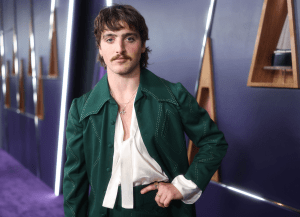


Gina Gershon AlphaPussy Memoir: What the Book Is and Why Showgirls Dominates It
Gina Gershon did not plan to write a memoir. The idea arrived, as many good ideas do, during an evening of social drinking.
“This book realistically started during COVID,” she explained from her New York home in a DNYUZ interview. “I’d told my book agent, a friend, some stories one day when we were drunk, and he kept prodding me to write a book. I was hesitant, though. I’m not a tell-all gal, that’s not my MO.”
The book she eventually produced — AlphaPussy: How I Survived the Valley and Learned to Love My Boobs, published by Akashic Books — is not quite a memoir and not quite a self-help guide. It is a collection of true stories structured around a central concept: the “AlphaPussy,” which Gershon defines as a woman who stands on her own two feet, exercises agency over her life, navigates manipulation without being absorbed by it, and trusts her gut even when the entire room — or the entire film industry — tells her to do otherwise.
“I really wanted to stay on point with the themes of manipulation, survival, and moving around and being able to stand on your own two feet and know who you are and to have agency over your life,” Gershon said. “Especially as a woman, especially as an actress, especially in this world.”
The book spans decades: her freewheeling 1970s childhood in the San Fernando Valley, her defiant adolescence, and her working career across stage, screen, and television — accumulating encounters with Paul Verhoeven, Tom Cruise, Sharon Stone, Prince, Jennifer Tilly, Sylvester Stallone, David Mamet, Bob Fosse, and others. Endorsers include Aubrey Plaza, who called it “wild, soulful, hilarious, and somehow looks you directly in the eye and tells it like it is.”
But the gravitational centre of AlphaPussy is unambiguously Showgirls. Gershon devotes multiple chapters to the 1995 film — more than to any other project — not because Cristal Connors was her favourite role, but because the experiences of making it “best capture” her evolution as an AlphaPussy. She jokes that she could have written an entire separate book about the production: “I could write a whole damn book on that movie alone.”
Sources: Yahoo Entertainment | DNYUZ — Gershon interview | Westport Library
Gina Gershon Paul Verhoeven: “Show Your Vagina” — The Trailer Confrontation
The single most reported revelation from AlphaPussy is the scene Gershon reconstructs from her Showgirls makeup trailer — a scene that she describes as arriving without warning on a day she had specifically resolved to avoid conflict.
“I was in the hair and makeup trailer once again, waiting for my team to transform me, when Paul came in and said without any warning, ‘In today’s scene, I think it would be good if you showed your vagina,'” she writes. “Whoa, that came out of the f—— blue. Just that morning, I’d made a deal with myself that, no matter what, I would avoid all arguments that day. Oh boy, this one was going to be a doozy.”
Verhoeven’s justification was twofold: Elizabeth Berkley would be doing so in the same film, and Sharon Stone had done something comparable in his previous film Basic Instinct (1992) in the scene that had made both of them globally famous. The implication was clear — this was simply what working with Verhoeven looked like.
Gershon knew immediately that she was not going to comply. Her contract did not require that level of nudity. But she also recognised that a direct refusal risked the kind of escalating argument she had promised herself to avoid. She took a moment and devised a counter.
She had a sit-down with Verhoeven and delivered, in her telling, the following:
“I totally understand what you want to do with this shot, but truth be told — we’ve seen it. As you already pointed out, we’ve seen Sharon’s vagina, and we will see Elizabeth’s vagina. So I was thinking, well, just imagine this: It’s dark. We don’t know where we are. It’s murky. Then pink. Then kind of fuzzy. Next thing you know, we’re in Cristal’s dressing room. But wait! How did we get here? We then realize we’ve been inside of me! We have been inside Cristal’s vagina!! Instead of just showing my pussy like Sharon and Elizabeth, let’s do the shot from inside my vagina! … We can even use a microscopic probe lens! No one has ever seen that before. It’s brilliant.”
Verhoeven’s response was to look at her as if she were “bonkers,” slowly back out of her trailer, and say: “No, it’s OK, we will do the scene as written.”
“He never mentioned my vagina again,” Gershon writes.
A spokesperson for Verhoeven told Fox News Digital: “Mr. Verhoeven has not read the memoir, and has no comment.”
The vagina exchange was not the only physical conflict in the trailer. Gershon also reveals that during a separate argument, she threw a makeup chair at Verhoeven. “Fancy makeup chairs in nice movie trailers are heavy,” she recalled. “So when I tried to throw it across the room, it landed with a pathetic thud only a few inches away.”
Sources: Page Six / DNYUZ | Fox News Digital | AOL / Fox | Yahoo Entertainment
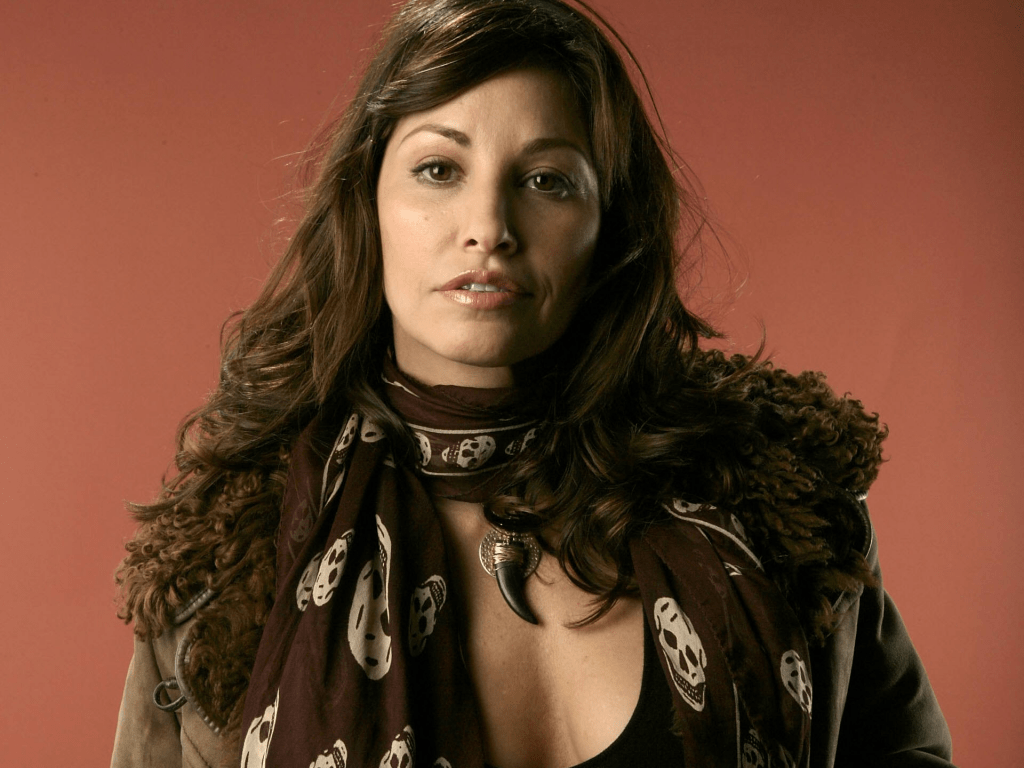
Showgirls Behind the Scenes: Gershon and Verhoeven’s “Constant” Fights
The vagina exchange was not an isolated incident. Gershon describes her entire working relationship with Verhoeven during Showgirls as a sustained battle over creative control — one she both resented and, in retrospect, understood.
“Paul was infamous for fighting with his stars, and — lucky me! — I guess I was his chosen sparring partner on Showgirls,” she writes. “I think Paul secretly enjoyed it when we argued about the most mundane things. Sometimes I suspected he was throwing things out there just to see if he could get a rise out of me. Or maybe not. Maybe it was annoying that I didn’t just roll over and do what he asked.”
She adds, with characteristic complexity: “Whatever the case, our battles were becoming exhausting. And let me say this: I liked Paul. A lot! Especially when we weren’t locked in some game of control. He is a very smart, very interesting guy. A mathematician and theologian. I really enjoyed our chats about religion and philosophy.”
The creative battles extended beyond nudity. Gershon tried — and failed — to convince Verhoeven to cut one of the film’s most memorably absurd exchanges: the scene in which Cristal tells Nomi she loves eating dog food. Gershon described it as “the dumbest conversation ever between two sober characters.” Verhoeven refused. The scene remains in the final cut and has become one of the film’s most quoted moments.
The accent battle produced a different outcome — though only because Gershon deployed deception rather than argument. Verhoeven insisted Cristal should have no accent at all. Gershon had a specific vision: Cristal would use an exaggerated Texas drawl in public but speak naturally in private, creating a character distinction that she felt was essential to the role. Unable to convince Verhoeven through argument, she told him she was from Tennessee and did the accent anyway. She was born and raised in California.
“The primary reason” she has difficulty watching the film today, she writes, is the accent — which came out inconsistently due to Verhoeven’s resistance. “It is completely off at times. Sometimes not even there.”
Gershon also notes an unexpected human connection during production: makeup artist David Forrest — who created the rhinestone-nipple look for the “Goddess” number — revealed to her at 4 a.m. one morning, while gluing those rhinestones into place, that he had once been the cowboy in the Village People.
“In a perfect Showgirls detail,” Gershon observed.
Sources: Yahoo Entertainment | AOL | AceShowbiz
Gina Gershon Showgirls Age Lie: Why She Said 34–35 Instead of 33
One of the memoir’s more strategically revealing confessions concerns an act of deliberate deception that had nothing to do with Verhoeven — and everything to do with Gershon’s understanding of who Cristal Connors needed to be.
Gershon was 33 years old when Showgirls premiered in September 1995. Before filming began, she told producers she was 34 or 35.
The reasoning was specific and character-driven: “To me, Cristal had to be at the end of her career, closing in on 40, in order to feel threatened by Nomi, the ambitious newcomer,” she explains in the book. “I worked hard to present myself as this reluctantly maturing showgirl.”
The internal logic holds. Cristal Connors is Showgirls’ most complex character precisely because her menace toward Nomi is rooted in genuine fear — fear of replacement, of irrelevance, of a younger version of herself arriving to claim the spotlight she has worked for decades to occupy. If Cristal is 33, that existential threat feels less urgent. If Cristal is approaching 40, it feels like everything.
To support the age deception, Gershon undertook a physical transformation that went well beyond wardrobe:
- She stuffed her bra to suggest a more established, surgically-enhanced Vegas showgirl silhouette
- She applied heavy makeup to visually add years to her face
- She altered the timbre of her voice and the rhythm of her speech to sound like a jaded Southern veteran rather than a California native
- She lied to Verhoeven about being from Tennessee to justify the Texas accent she had decided Cristal required
Sharon Stone — who appears elsewhere in the memoir as a notable advisor — had told Gershon to lie about her age. The advice, delivered in the specific competitive economy of 1990s Hollywood, was both pragmatic and somewhat melancholy: age in the industry was not simply a number but a negotiating position, and the further you could push it in either direction to suit the role, the better.
Gershon also reveals that the audition itself was physically brutal. She danced so hard during her audition that she tore her hamstring, then excused herself, went to her car, and cried. Elizabeth Berkley, who would go on to play Nomi, saw her and offered comfort — and the two “bonded immediately.”
The role Gershon wanted so badly that she lied about her age, tore a muscle, and wore rhinestones on her nipples at 4 a.m. was one she also, by her own account, nearly did not survive emotionally. She went into it expecting Verhoeven’s dark Dutch art cinema. She arrived on set and found something else entirely.
“I thought it was gonna be one of his dark Dutch films,” she told DNYUZ. “When I got there, I realized it was a completely different film from what I had envisioned. The biggest challenge was to adjust to what it was and to figure out a way to play it that made sense in the environment.”
Sources: Yahoo Entertainment | Page Six / DNYUZ | AceShowbiz
Prince Showgirls Soundtrack: The Musical History Nobody Knew
Among the least-known revelations in AlphaPussy — and one of the most significant for music and film history — is Gershon’s account of who was originally hired to score Showgirls.
According to Gershon, Prince was originally supposed to compose the music for Showgirls. He was largely replaced by Dave Stewart of Eurythmics, who ultimately scored the film and wrote its original songs, including “Walk Into the Wind” — which won the 1995 Razzie Award for Worst Original Song (performed in the film by Pamela Anderson).
Two Prince songs did survive into the final film. But the full Prince score that might have been — a collaboration between one of the era’s most distinctive musical voices and one of Hollywood’s most deliberately transgressive directors — exists only in the unmade version of the movie that never reached audiences.
Verhoeven explained the Dave Stewart choice in his own terms at the time: “The idea was to make the same loud, sleazy, bad music that you hear in those Vegas shows, because that’s how it actually is.” Whether Prince’s sensibility — which ran toward the lush, the spiritual, the sensually complex — would have served that deliberately trashy aesthetic differently or better is a question the film’s history leaves permanently open.
Gershon and Prince: The Purple Rain Audition She Turned Down
Gershon’s Prince connection predates Showgirls by nearly a decade and takes an unexpected personal form. She reveals in AlphaPussy that Prince flew her to Minnesota — his home base, where he recorded and worked out of Paisley Park — to audition for a role in Purple Rain (1984).
She turned the audition down. The reason: she read the script and “wasn’t sure about the sex scene.”
Purple Rain went on to gross over $68 million theatrically against a $7.2 million budget, win an Academy Award for Best Original Song Score, and launch the definitive chapter of Prince’s career. The film’s cast included Apollonia Kotero and Morris Day. Whatever role Gershon was being considered for — she does not specify which character in the memoir — it would have placed a future Showgirls cult icon inside one of the decade’s most significant music films.
The two Prince connections — the Purple Rain audition she declined and the Showgirls score that was replaced — frame a curious parallel history: a musician and an actress who kept almost collaborating, across a decade and two films, without ever fully doing so.
Sources: Yahoo Entertainment | AceShowbiz | Wikipedia — Showgirls Soundtrack | Billboard — Showgirls music history
Showgirls Cult Film History: From $37M Box Office Disaster to Beloved Camp Classic
Understanding why Gershon’s memoir commands this level of attention three decades after the film’s release requires understanding what Showgirls actually is — and what it has become.
The film was directed by Paul Verhoeven, written by Joe Eszterhas (who received $2 million upfront plus $1.7 million on production, making him the highest-paid screenwriter in Hollywood history at the time), and starred Elizabeth Berkley, Kyle MacLachlan, and Gershon as Cristal Connors. It was produced on a budget of approximately $45 million.
It received the first NC-17 rating ever given to a studio film released wide in mainstream US theatres — for “nudity and erotic sexuality throughout, some graphic language, and sexual violence.” MGM dispatched hundreds of staffers to theatres to check IDs and prevent under-18 viewers from sneaking in from adjacent screens.
The film opened in September 1995 to what can only be described as near-unanimous critical contempt. It made approximately $37 million at the US box office — a significant financial failure against its budget. It won a then-record seven Razzie Awards from a then-record 13 nominations including Worst Picture, Worst Director (Verhoeven accepted in person), Worst Actress (Berkley), and Worst Original Song.
Verhoeven’s response to the Razzie was characteristically defiant: he attended the ceremony himself and accepted the award with apparent delight.
What followed the theatrical disaster was the film’s second life. Showgirls sold over $100 million in VHS rental and sales — making it one of the most successful home video releases of its era and one of MGM’s top twenty all-time bestsellers. It built a devoted cult following throughout the late 1990s and 2000s. In the 2010s and 2020s, critical re-evaluation began seriously: scholars and filmmakers started treating it as intentional satire of Las Vegas excess, Hollywood ambition, and the male gaze — a reading Verhoeven himself has increasingly endorsed.
“All of a sudden, people who hated it love it now,” Gershon told Fox News Digital. “I’m happy it’s brought so many people hours of pleasure.”
Before Gershon was cast as Cristal Connors, the role had been considered for Madonna and Sharon Stone. The Nomi Malone role went through a long list of names including Pamela Anderson, Drew Barrymore, Angelina Jolie, Jennifer Lopez, and Charlize Theron before landing on Elizabeth Berkley.
| Showgirls (1995) — Key Facts | Detail |
|---|---|
| Director | Paul Verhoeven |
| Screenplay | Joe Eszterhas ($3.7M total fee) |
| Budget | ~$45 million |
| US Box Office | ~$37 million (theatrical) |
| Home Video Revenue | Over $100 million |
| MPAA Rating | NC-17 (first wide-release NC-17 film in US history) |
| Razzie Awards | 7 (from 13 nominations — both records at the time) |
| Original Soundtrack Composer | Dave Stewart (Eurythmics) — replaced Prince |
| Cristal Connors Casting | Gershon (after Madonna, Sharon Stone considered) |
| Nomi Malone Casting | Elizabeth Berkley (after Jolie, Lopez, Theron, others considered) |
| Cult Status | Yes — one of MGM’s top 20 all-time bestsellers by the 2000s |
Sources: Wikipedia — Showgirls | Fox News Digital | Billboard
Gina Gershon Showgirls Research: Strip Clubs, Tax Write-Offs, and Method Preparation
The memoir also documents the less-reported dimension of Gershon’s Showgirls commitment: the research she conducted before filming began. She visited Las Vegas strip clubs to understand the lives of showgirls from the inside — observing the professional rituals, physical demands, and social dynamics of the world Cristal Connors had inhabited for decades.
“It brought me great glee to turn in my late-night receipts from all these places of ill repute to my business manager, because guess what? Now they were tax write-offs!” she writes.
The strip club research sits alongside the age lie, the bra stuffing, the voice alteration, and the accent deception as part of a portrait of an actress who committed entirely to a character — even as the production around her was becoming something she had not agreed to make. Gershon walked into Showgirls expecting Verhoeven’s dark, serious European art cinema. She found a maximalist, deliberately excessive Vegas spectacle.
Her response was not to walk out but to adapt — to find what Cristal Connors could be within the film that was actually being made, rather than the one she had imagined. That discipline, she argues in AlphaPussy, is the core AlphaPussy skill: maintaining focus on your own artistic objectives while navigating an environment that is actively trying to absorb or overwhelm you.
She watched the film again recently, for the first time in decades. The verdict was nuanced: “I hadn’t seen it in a zillion years, and when I saw it, I understood it a little bit more. It made me feel tense, but I also thought, ‘Oh, interesting.’ Some scenes that I thought shouldn’t have been there and others that absolutely have to be there.”
Gina Gershon: Career Beyond Showgirls
Gershon’s memoir covers far more than Showgirls. It documents a career that has ranged across cult cinema, Broadway, and television across more than four decades — and a life marked by the specific challenges of being a woman with autonomous artistic instincts in an industry that historically preferred compliance.
Her film credits include Bound (1996, the Wachowskis’ debut — she was warned “You will never work again” for playing a lesbian), The Insider (1999), Face/Off (1997), and The Player (1992). Her television credits span Curb Your Enthusiasm, Riverdale, Brooklyn Nine-Nine, and Elsbeth.
On Broadway, she appeared in Sam Mendes’s Cabaret revival and the Tony Award-winning Boeing-Boeing. She has performed at Carnegie Hall three times, playing the Jew’s harp alongside Sting, Laurie Anderson, Joan Baez, and Gogol Bordello.
She has also previously published: In Search of Cleo: How I Found My Pussy and Lost My Mind — a book she also performed as a one-woman show with an accompanying album. She co-authored the young adult novel Camp Creepy Time with her brother Dann.
The AlphaPussy title draws on this accumulated experience — the assertion that surviving Hollywood as a woman with agency is not a passive achievement but an active, ongoing act of self-determination that requires exactly the skills Gershon deployed in that trailer with Verhoeven: reading the situation, improvising a response that sidesteps direct conflict while achieving the desired outcome, and walking away with your dignity intact.
“He never mentioned my vagina again,” she writes. In the context of AlphaPussy, that sentence is not just a punchline. It is the point.
Frequently Asked Questions
What is Gina Gershon’s memoir about?
AlphaPussy: How I Survived the Valley and Learned to Love My Boobs (Akashic Books) is a collection of true stories about Gershon’s life from her 1970s childhood in the San Fernando Valley through her decades-long film and theatre career. The book focuses on themes of manipulation, survival, and personal agency — particularly for women navigating the film industry. Multiple chapters cover the making of Showgirls (1995), which she describes as the project that best captures her evolution as an “AlphaPussy.”
What did Paul Verhoeven ask Gina Gershon to do on the Showgirls set?
According to the memoir, Verhoeven entered her makeup trailer unannounced and said: “In today’s scene, I think it would be good if you showed your vagina.” Gershon declined but avoided a direct confrontation by proposing an outrageous alternative — a shot from inside her vagina using a “microscopic probe lens.” Verhoeven declined her counter-proposal and allowed her to do the scene as originally written. Verhoeven’s spokesperson told Fox News Digital he had not read the memoir and had no comment.
Why did Gina Gershon lie about her age for Showgirls?
Gershon was 33 when filming began but told producers she was 34 or 35. Her reasoning was character-based: she felt Cristal Connors needed to be closer to 40 to feel genuinely threatened by younger rival Nomi Malone. To support the deception, she stuffed her bra, applied heavy aging makeup, altered her voice, and lied to Verhoeven about being from Tennessee to justify the Southern accent she had decided Cristal required.
Was Prince originally supposed to score Showgirls?
Yes, according to Gershon’s memoir. Prince was originally expected to compose the music for Showgirls but was largely replaced by Dave Stewart of Eurythmics, who scored the final film. Two Prince songs survived into the completed movie. The Dave Stewart-written “Walk Into the Wind” — performed in the film by Pamela Anderson — won the 1995 Razzie Award for Worst Original Song.
Why did Gina Gershon turn down Purple Rain?
Prince flew Gershon to Minnesota to audition for a role in Purple Rain (1984). She turned it down after reading the script because she was uncertain about a sex scene in the role. The film went on to gross over $68 million theatrically and win an Academy Award.
What other Showgirls secrets does Gershon reveal in the memoir?
Among other revelations: she threw a makeup chair at Verhoeven during an argument (it landed a few inches away); she fought — unsuccessfully — to cut the dog food dialogue scene; she lied about being from Tennessee to justify the Southern accent Verhoeven had forbidden; she visited Las Vegas strip clubs to research the role and wrote off the receipts as tax deductions; makeup artist David Forrest revealed at 4 a.m. — while gluing rhinestones to her nipples — that he had once been the cowboy in the Village People; and she tore her hamstring during the audition, cried in her car, and bonded with Elizabeth Berkley who comforted her.
Is Showgirls a good movie?
Showgirls was universally panned on release in 1995 and won a record seven Razzie Awards. It has since been substantially critically re-evaluated and is now regarded as a cult classic — partly as camp entertainment, partly as a serious if excessive satire of Las Vegas and Hollywood ambition. It sold over $100 million in home video, making it one of MGM’s top 20 all-time bestsellers. Verhoeven attended the Razzie ceremony and accepted his Worst Director award in person.
This article is based on verified reporting from Yahoo Entertainment, Page Six / DNYUZ, Fox News Digital, AceShowbiz, AOL Entertainment, Symplexia Labs, NY Times Post, DNYUZ, Billboard, Wikipedia (Showgirls; Showgirls soundtrack), and the Westport Library VersoFest event listing. All direct quotes attributed to Gina Gershon are drawn from her memoir AlphaPussy: How I Survived the Valley and Learned to Love My Boobs and from her interviews with Fox News Digital, Page Six, and DNYUZ. Paul Verhoeven’s spokesperson told Fox News Digital he had not read the memoir and had no comment. All Showgirls production details are sourced from Wikipedia and Billboard.