

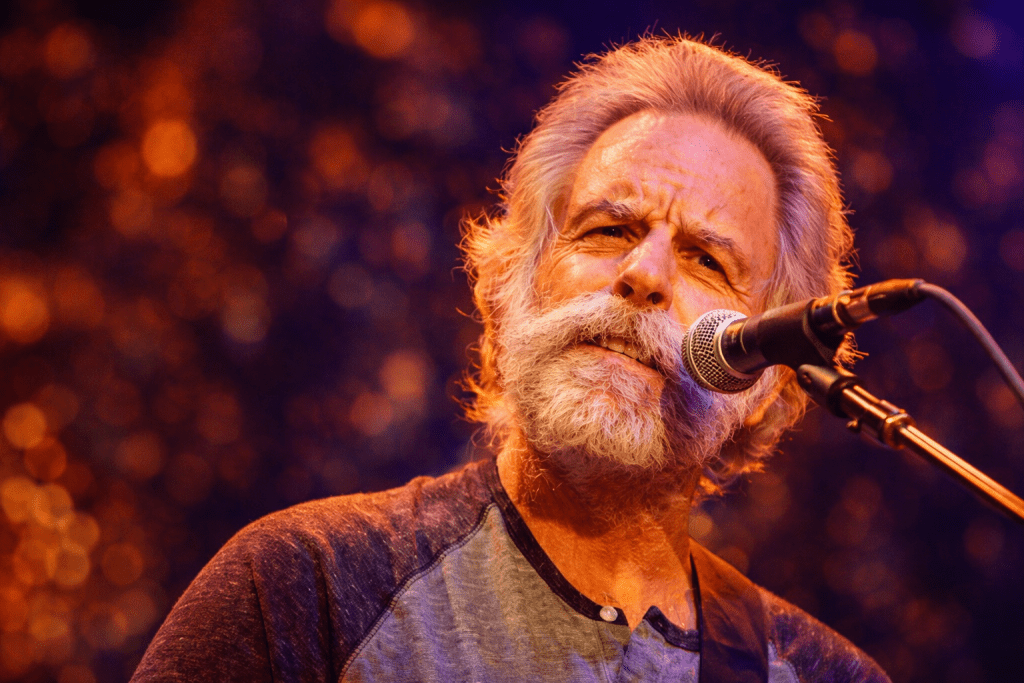
Bob Weir stands as one of American rock music’s most influential figures, having spent six decades crafting a distinctive sound that revolutionized the genre. As co-founder and rhythm guitarist of the Grateful Dead, Weir pioneered improvisational rock, blending folk, blues, jazz, and psychedelia into an unprecedented musical experience.
His innovative approach to rhythm guitar, songwriting contributions including classics like “Sugar Magnolia” and “Truckin’,” and continued musical exploration through Dead & Company have cemented his status as a living legend. This article examines Weir’s enduring impact on rock music, his technical innovations, and the cultural movement he helped create—a legacy that continues inspiring musicians and fans worldwide.
The Early Years: Building a Musical Revolution
Robert Hall Weir was born on October 16, 1947, in San Francisco, California. At just eighteen years old, he co-founded the Grateful Dead in 1965 alongside Jerry Garcia, Phil Lesh, Ron “Pigpen” McKernan, and Bill Kreutzmann (Rolling Stone). This partnership would fundamentally transform American rock music for generations to come.
What made Weir special wasn’t just his guitar playing—it was how he reimagined what a rhythm guitarist could do. Unlike traditional rock guitarists who played straightforward chord progressions, Weir developed a jazz-influenced approach that created musical conversations with Garcia’s lead guitar. His sophisticated chord voicings and unexpected harmonic movements gave the Grateful Dead their signature spacious, exploratory sound (NPR Music).
Beyond the music itself, Weir helped cultivate the “Deadhead” community—devoted fans who followed the band extensively, creating a cultural phenomenon that changed how artists and audiences connect. This relationship transformed concerts from simple entertainment into communal celebrations, a model that countless contemporary artists still try to replicate.
Iconic Songs That Defined a Generation
Throughout his career, Bob Weir has written numerous songs that became anthems of American rock. His collaboration with lyricist John Perry Barlow produced timeless classics that continue resonating with audiences today.
“Sugar Magnolia” showcases Weir’s ability to craft melodically accessible yet harmonically sophisticated music. The song captures both youthful energy and deeper emotional complexity, making it a perennial favorite at concerts (Grateful Dead Official).
“Truckin'” achieved remarkable cultural impact. Co-written with Garcia, Lesh, and Barlow, this song documented the band’s touring experiences and became one of rock’s most recognizable anthems. Its significance was officially recognized when the Library of Congress added it to the National Recording Registry, acknowledging its cultural and historical importance to American music (Library of Congress).
Other compositions like “Playing in the Band” and “The Other One” demonstrated Weir’s willingness to experiment with extended improvisational structures and unusual time signatures, providing frameworks for the Grateful Dead’s legendary live performances where songs transformed nightly through collective improvisation.
Bob Weir’s Complete Impact: Key Contributions
| Category | Achievement | Why It Matters |
|---|---|---|
| Guitar Innovation | Jazz-influenced rhythm techniques and complex chord voicings | Redefined what rhythm guitar could accomplish in rock music |
| Hit Songs | “Sugar Magnesia,” “Truckin’,” “Playing in the Band” | Created timeless classics recognized by Library of Congress |
| Live Performance | 30+ years with Grateful Dead; pioneered improvisational concerts | Transformed concert culture and created the jam band movement |
| Fan Community | Built the Deadhead phenomenon | Changed how artists engage with fans; influenced modern music marketing |
| Career Longevity | 60 years of active performance; still touring with Dead & Company | Proves sustained artistic excellence across generations |
| Mentorship | Collaborated with younger musicians like John Mayer | Bridges musical generations and keeps legacy alive |
Staying Relevant: Dead & Company Era
After Jerry Garcia’s passing in 1995, many wondered if Weir’s musical journey would continue with the same impact. He answered definitively with RatDog (1995-2014) and then Dead & Company, formed in 2015 (Jambase).
Dead & Company brought together Weir with John Mayer, Oteil Burbridge, Jeff Chimenti, and former Grateful Dead members Mickey Hart and Bill Kreutzmann. This collaboration proved wildly successful, consistently ranking among the highest-grossing touring acts and selling out major venues nationwide (Pollstar).
What’s remarkable is that Weir, now in his late seventies, continues performing with undiminished skill. His guitar playing retains its characteristic complexity, and his stage presence radiates genuine joy in musical collaboration. This sustained excellence over six decades represents an exceptional achievement in rock music.
Technical Mastery: The Weir Guitar Style
Bob Weir’s guitar technique deserves special attention for its sophistication and influence. He incorporated elements from jazz, classical, and traditional American music, creating a hybrid style that defied categorization. Weir frequently used alternate tunings like open D and open G, which enabled his distinctive chord voicings and rapid fretboard movement while maintaining harmonic complexity (Guitar Player Magazine).
The conversational quality between Weir and Garcia became legendary. Rather than simply providing background rhythm, Weir’s playing engaged in musical dialogue—responding to Garcia’s melodies with complementary harmonies, countermelodies, and rhythmic accents. This required exceptional listening skills, deep harmonic knowledge, and instantaneous decision-making.
Young guitarists studying Weir’s performances discover that supporting roles can achieve equal artistic significance to lead positions when executed with imagination and skill. His approach demonstrates that technical virtuosity need not dominate musical expression.
Cultural Impact Beyond Music
The Grateful Dead’s cultural influence, shaped significantly by Weir, extended far beyond music. The band challenged industry conventions in ways that predicted modern music industry transformations. Their permissive attitude toward audience recording, emphasis on live performance over studio production, and resistance to commercial radio formats demonstrated alternative pathways to success (Rolling Stone).
The “Deadhead” community represented something unprecedented—a dedicated following that became a genuine subculture with distinct values and customs. Sociologists and cultural scholars have studied this phenomenon as a significant social movement reflecting American values around individualism, community, and alternative lifestyles.
Weir’s accessible personality and genuine appreciation for fans helped nurture these relationships. His belief that music belonged to communities rather than corporations resonates powerfully in contemporary discussions about artistic ownership and fan engagement.
Why Bob Weir’s Legacy Matters Today
Bob Weir’s sixty-year musical journey demonstrates sustained artistic integrity and creative courage. His technical innovations transformed rhythm guitar possibilities, while his songs achieved genuine cultural permanence. The movement he helped create continues influencing how artists engage fans and how concerts function as communal experiences.
As Weir continues performing in his late seventies with Dead & Company, his legacy remains not merely historical but vitally contemporary. He embodies rock music’s transformative potential and proves that dedication to craft, openness to collaboration, and genuine connection with audiences can sustain a remarkable career across multiple generations. For aspiring musicians and longtime fans alike, Bob Weir represents the enduring power of American rock music at its finest.