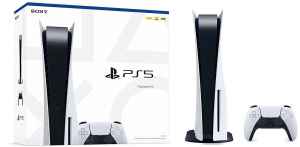

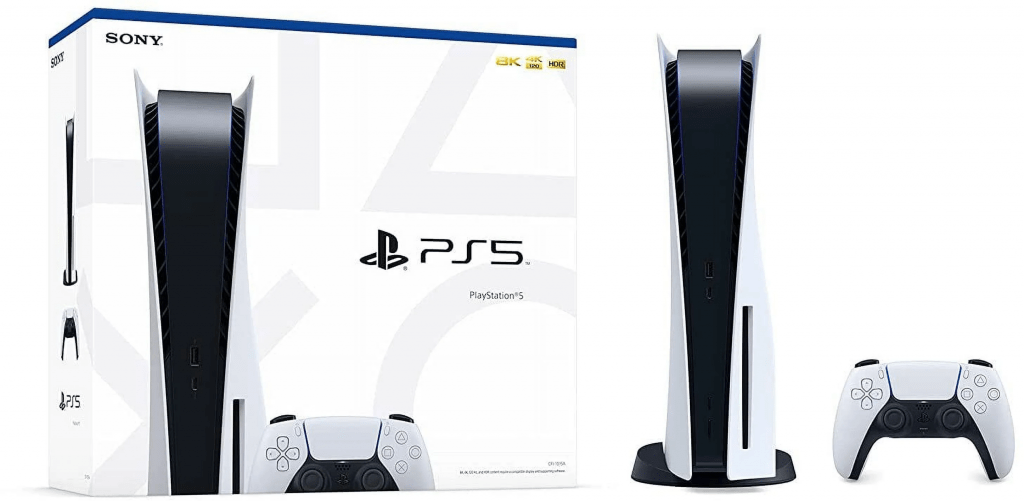
Why Is PS5 So Expensive in 2026? Sony’s Official Statement
On March 27, 2026, Sony Interactive Entertainment Vice President of Global Marketing Isabelle Tomatis published a post on the official PlayStation Blog confirming sweeping global price increases across all PS5 hardware, effective April 2, 2026.
Sony’s statement read:
“With continued pressures in the global economic landscape, we’ve made the decision to increase the prices of PS5, PS5 Pro, and PlayStation Portal remote player globally. We know that price changes impact our community, and after careful evaluation, we found this was a necessary step to ensure we can continue delivering innovative, high-quality gaming experiences to players worldwide.”
The language was deliberately broad. Sony did not name memory chips, AI demand, or semiconductor market conditions in its public statement. Industry analysts, semiconductor market data, and supply chain reporting filled in the gaps immediately.
This is the second price hike in under a year. Sony raised PS5 prices by approximately $50 in August 2025 — the first increase since launch. The April 2026 hike adds a further $100–$150 on top of that, meaning the standard PS5 disc edition has risen $150 above its original November 2020 launch price of $499.99 in under six months of combined increases. The PS5 Digital Edition, which launched at $399.99, now costs $200 more at $599.99.
Piers Harding-Rolls, Research Director of Games at Ampere Analysis, told CNBC the increases were inevitable: “It is likely that Sony had price protections for its components for a set period and this may well have come to an end. With no sign of prices easing… Sony will have made the move to protect its slim hardware margins. It wouldn’t be a surprise if Microsoft and Nintendo followed suit in the not-too-distant future.”
Sources: PlayStation Blog | CNBC | VGC
Also Read Chelsea Handler: RFK Jr.’s House Had “No Foundation” — 4 Years to Move In, Cheryl Hines Fires Back.
PS5 Price Increase April 2026: Every Model, Every Region
The April 2 price increases apply globally across all PS5 hardware. Here is the complete breakdown across the three major markets:
United States — New PS5 Prices April 2026
| Model | Old Price | New Price | Increase |
|---|---|---|---|
| PS5 (Disc Edition) | $549.99 | $649.99 | +$100 |
| PS5 Digital Edition | $499.99 | $599.99 | +$100 |
| PS5 Pro | $749.99 | $899.99 | +$150 |
| PlayStation Portal | $199.99 | $249.99 | +$50 |
United Kingdom — New PS5 Prices April 2026
| Model | Old Price | New Price | Increase |
|---|---|---|---|
| PS5 (Disc Edition) | £479.99 | £569.99 | +£90 |
| PS5 Digital Edition | £429.99 | £519.99 | +£90 |
| PS5 Pro | £699.99 | £789.99 | +£90 |
| PlayStation Portal | £199.99 | £219.99 | +£20 |
Europe — New PS5 Prices April 2026
| Model | Old Price | New Price | Increase |
|---|---|---|---|
| PS5 (Disc Edition) | €549.99 | €649.99 | +€100 |
| PS5 Digital Edition | €499.99 | €599.99 | +€100 |
| PS5 Pro | €799.99 | €899.99 | +€100 |
| PlayStation Portal | €219.99 | €249.99 | +€30 |
PS5 Launch Price vs. April 2026 Price: The Full Picture
| Model | Launch Price (Nov 2020) | April 2026 Price | Total Rise |
|---|---|---|---|
| PS5 Disc Edition | $499.99 | $649.99 | +$150 (+30%) |
| PS5 Digital Edition | $399.99 | $599.99 | +$200 (+50%) |
| PS5 Pro | $699.99 (Nov 2024) | $899.99 | +$200 (+29%) |
| PlayStation Portal | $199.99 (2023) | $249.99 | +$50 (+25%) |
The PS5 Digital Edition’s 50% price increase since launch is the starkest figure in the table — a console that launched at $399.99 to appeal to budget-conscious players now costs $599.99, placing it above the original disc edition’s launch price.
Sources: Push Square | Tom’s Guide | Twisted Voxel
Memory Chip AI Demand: The Real Reason PS5 Is Getting More Expensive
The official Sony statement cited “global economic landscape” pressures. The actual mechanism driving those pressures is specific, documented, and unprecedented in the history of consumer electronics pricing — and it connects directly to the artificial intelligence infrastructure buildout that has dominated technology investment since 2023.
How AI Data Centres Starved the Gaming Industry of Memory
Modern console hardware depends on two categories of memory components: GDDR6 VRAM (the high-speed graphics memory that enables the PS5’s visual performance) and NAND flash storage (the SSD that enables near-instantaneous load times). Neither can be substituted with cheaper alternatives without a fundamental redesign of the console’s architecture — which would cost more than any price increase Sony is implementing.
The three companies that manufacture the overwhelming majority of the world’s memory chips — Samsung, SK Hynix, and Micron — have made a calculated commercial decision: AI data centres pay significantly more per unit of memory than consumer electronics manufacturers. Alphabet (Google), Nvidia, OpenAI, Microsoft, and Meta are building AI infrastructure at a scale that requires extraordinary volumes of high-bandwidth memory. They pay premium prices to secure supply. Consumer electronics manufacturers — including Sony, Nintendo, and laptop makers — cannot match those margins.
The result, as Sportskeeda Tech reported: “AI data centers consume massive amounts of high-speed memory and, more importantly, pay much higher prices for it. As a result, consumer-grade memory production has taken a backseat.”
The Numbers Behind the Shortage
The scale of the supply diversion is documented and severe:
- Micron’s business chief Sumit Sadana told CNBC in January 2026 that the company is “completely sold out for 2026” — with demand significantly exceeding available supply for the foreseeable future
- AI data centres are forecast to consume 70% of global memory chip production in 2026, according to industry forecasts cited by Dataconomy
- SK Hynix expects the memory crisis to persist until at least 2030
- New market research cited by PC Gamer states there is “no scenario where memory prices correct in the second half of 2027”
- DRAM prices have risen approximately 75% in a single month at the peak of the crisis, according to industry tracking data
- PC global sales are forecast to fall 5% in 2026 directly due to spiralling memory prices
Piers Harding-Rolls at Ampere Analysis also flagged an additional compounding factor: the ongoing conflict in the Middle East. “A new wave of inflation is expected from the war in the Middle East, and this will compound the effect of the component price increases,” he told CNBC.
Why Sony Cannot Simply Redesign Around the Shortage
The GDDR6 VRAM and NAND flash storage at the centre of the PS5’s price problem are not interchangeable components. Switching memory types would require a fundamental redesign of the PS5’s system-on-chip (SoC) architecture — an engineering project of the same scale as developing a new console. Sony’s CFO Lin Tao stated during a February 2026 earnings call that the company has “secured the minimum RAM supply required to support PS5 production throughout 2026” — confirming that supply security, not shortage, is the immediate status, but that the cost of securing that supply is being passed to consumers.
Sony’s stated strategy for managing the pressure: focus on monetising its existing install base through software and network services rather than expanding hardware sales — a significant strategic shift for a company that historically used competitive hardware pricing to grow its player base.
Sources: CNBC | PC Gamer | Sportskeeda Tech | Dataconomy
PS5 Sales Impact: 16% Holiday Drop as Price Hikes Bite
The price increases are landing on a PlayStation business already feeling the strain of elevated hardware costs. In the October–December 2025 holiday quarter — historically the strongest sales period of any year — PS5 sales fell 16% year-on-year to 8 million units.
That decline is significant context for the April 2026 hike. Sony is raising prices on a console whose sales trajectory is already moving in the wrong direction, at a time when the gaming market more broadly is under pressure. Epic Games, maker of Fortnite, cited “sluggish console sales” among the reasons for cutting 1,000 jobs earlier in 2026.
Industry analysts say the April hike will further dampen growth in the video game market. The combination of elevated prices, reduced first-party software output (Sony recently closed Bluepoint Games and Dark Outlaw Games), and a generation that has delivered fewer new exclusive franchises than any prior PlayStation generation has created a challenging commercial environment — one that a further $100–$150 price increase will not improve in the near term.
Sources: BNN Bloomberg | Kotaku
PS6 Release Date Delay: Why Sony May Push to 2028–2029
The memory chip crisis does not only affect the price of consoles already on shelves. It threatens to delay the PlayStation 6 — the next generation of Sony hardware — by potentially two or more years beyond its previously expected window.
What Was the Original PS6 Timeline?
Sony’s standard console generation cycle runs six to seven years. The PS5 launched in November 2020. By that pattern, a 2026–2027 PS6 launch was the industry’s default expectation for years. As recently as late 2025, Sony’s lead architect Mark Cerny said in an interview with AMD Senior Vice President Jack Huynh that the next PlayStation would arrive “in a few years’ time” — widely interpreted as confirmation of a late 2027 target.
What Bloomberg Sources Reported
In February 2026, Bloomberg reported — citing people familiar with Sony’s thinking — that Sony is “considering pushing back the debut of its next PlayStation console to 2028 or even 2029.” The outlet described this as “a major upset to a carefully orchestrated strategy to sustain user engagement between hardware generations.”
The specific driver is high-bandwidth memory (HBM) — the class of RAM components critical to the PS6’s targeted performance specifications. With AI data centres consuming priority supply from Samsung and Micron, Sony cannot source HBM at volumes and prices that would allow a PS6 to launch at a commercially viable price point in 2027.
The Longest Gap in PlayStation History
Every prior PlayStation generation has followed a consistent rhythm:
| Console | Launch Year | Gap from Previous |
|---|---|---|
| PlayStation 1 | 1994 | — |
| PlayStation 2 | 2000 | 6 years |
| PlayStation 3 | 2006 | 6 years |
| PlayStation 4 | 2013 | 7 years |
| PlayStation 5 | 2020 | 7 years |
| PS6 (if 2027) | 2027 | 7 years |
| PS6 (if 2028) | 2028 | 8 years |
| PS6 (if 2029) | 2029 | 9 years — longest ever |
A 2029 PS6 would mean the PS5 remains Sony’s current-generation hardware for nine years — exceeding the longest prior gap by two full years and placing the PS5’s lifecycle in the same territory as the longest console generations in gaming history.
Why the PS6 Needs Memory That Doesn’t Yet Exist at Scale
The PS6’s hardware requirements compound the problem further. According to leaked specifications and analyst reporting, the PS6 is targeting approximately 30GB of GDDR7 RAM — nearly double the PS5’s 16GB GDDR6 allocation. At current memory pricing, that memory allocation alone could add $150–$200 to manufacturing costs before any other component is factored in.
Sony is co-developing the PS6’s chip with AMD under the codename Project Amethyst — incorporating three new technologies: Neural Arrays (GPU Compute Units maximised for AI-assisted performance), Radiance Cores (dedicated ray-tracing hardware), and Universal Compression (system-wide data compression). The PS6 is expected to use an AMD UDNA GPU and Zen 5 CPU architecture.
However, even cutting-edge architecture cannot compensate for a situation in which the memory required to run it costs more than the entire console budget allows at a mainstream price point. Analyst David Gibson of Macquarie flagged a “high likelihood” of a post-2028 launch in January 2026, citing Sony’s focus on PS5 longevity.
Sources: Game Rant | Dataconomy | NotebookCheck | TweakTown | ibtimes.com.au
The Wider Gaming Industry: Nobody Is Immune
Sony’s price hike and PS6 delay concerns are not isolated events — they are the most visible symptoms of a memory crisis that is reshaping the entire consumer gaming hardware landscape.
Microsoft raised the price of Xbox consoles and Game Pass subscriptions in 2025. AMD’s CEO has suggested the next-gen Xbox will launch in 2027, indicating Microsoft may attempt to beat Sony to market — but at what price point remains unclear.
Nintendo has said it is “carefully considering the situation” regarding a Switch 2 price increase. Nintendo launched the Switch 2 in mid-2026 at $450 — already above the original Switch’s $299 launch price — and analysts widely expect a further hike to $500 or beyond.
Valve’s Steam Machine plans — the PC gaming company’s long-rumoured console-adjacent hardware push — have been “scuppered by rising memory costs”, per PC Gamer.
PC gaming faces the same structural pressure. Global PC sales are forecast to fall 5% in 2026 due to spiralling memory prices. MSI has said it is preparing for “the most challenging year since the company was founded”, planning 15–30% price raises across its product lines. Intel is reportedly raising CPU prices by 10% in response to the same component cost pressures.
The Phison CEO has reportedly warned that “many consumer electronics manufacturers will go bankrupt or exit product lines by the end of 2026” due to the AI memory crisis — a statement that frames the PS5 price increase not as corporate opportunism but as the survival response of an industry under structural cost pressure it did not create and cannot rapidly resolve.
Sources: PC Gamer | Kotaku | Games Hub
Should You Buy a PS5 Now or Wait for PS6?
Given the price hike, the PS6 delay, and the memory market outlook, the question most consumers are asking is practical: buy now or wait?
The honest answer has multiple dimensions:
The case for buying now: The PS5 has an enormous software library built across five years of the generation, including major exclusives such as God of War Ragnarök, Spider-Man 2, Returnal, Demon’s Souls, and Gran Turismo 7. Grand Theft Auto VI — arguably the most anticipated game release of the decade — is scheduled for 2026 and will run on PS5. A PS6 is not confirmed for before 2028 at the earliest, and may cost considerably more than the PS5 at launch if memory costs remain elevated.
The case for waiting: The PS5 has just received its second price increase in under a year. Buying the console now at $649.99 (disc) or $599.99 (digital) means paying 30–50% above launch pricing for five-year-old hardware. If the PS6 launches in 2027 or 2028, PS5 hardware value will decline rapidly at that point.
The PS5 Pro calculation: The Pro, now at $899.99 in the US and £789.99 in the UK, represents the most extreme pricing in the console’s history. For players who already own a standard PS5, the upgrade proposition at $900 is difficult to justify unless PSSR upscaling and the improved GPU performance represent a meaningful difference to your specific gaming priorities.
The broader context: If SK Hynix’s forecast is accurate and the memory crisis persists until 2030, there is no short-term scenario in which PS5 prices fall — and no short-term scenario in which PS6 arrives cheaply. The era of the $400–$500 mainstream console may be structurally over for this generation cycle.
Frequently Asked Questions
Why did Sony increase PS5 prices in 2026?
Sony cited “continued pressures in the global economic landscape.” The core driver is a global shortage of memory chips — specifically GDDR6 VRAM and NAND flash storage — caused by AI data centres operated by Alphabet, Nvidia, OpenAI, and others consuming the majority of global memory production. Samsung, SK Hynix, and Micron have prioritised high-margin AI chip orders over consumer electronics supply, driving up costs for Sony and all other consumer hardware manufacturers.
How much does the PS5 cost in April 2026?
From April 2, 2026: PS5 Disc Edition $649.99 / PS5 Digital Edition $599.99 / PS5 Pro $899.99 / PlayStation Portal $249.99 in the US. UK prices: PS5 £569.99 / Digital £519.99 / Pro £789.99 / Portal £219.99. European prices: PS5 €649.99 / Digital €599.99 / Pro €899.99 / Portal €249.99.
Is this the first PS5 price hike?
No. Sony raised PS5 prices by approximately $50 in August 2025 — the first increase since the November 2020 launch. The April 2026 hike adds a further $100–$150, meaning the standard disc edition has risen $150 total above its original $499.99 launch price in under a year of combined increases.
When will the PS6 be released?
There is no confirmed PS6 release date. Sony’s original expected window was late 2027, based on the standard 6–7 year PlayStation generation cycle. Bloomberg reported in February 2026 that Sony is considering delaying the PS6 to 2028 or even 2029 due to the memory chip shortage. A 2029 release would be the longest gap between PlayStation generations in the company’s history — nine years since the PS5’s November 2020 launch.
Why might the PS6 be delayed?
The PS6 reportedly requires approximately 30GB of GDDR7 RAM to meet its performance targets. At current memory pricing — driven up by AI data centre demand — sourcing that RAM at volumes necessary for a mainstream console launch at a commercially viable price point is not feasible until market conditions improve. Micron is sold out through 2026; SK Hynix expects the crisis to last until 2030; analysts say there is no scenario where prices correct before the end of 2027.
Will the PS6 cost more than the PS5?
Almost certainly yes, given current memory pricing trajectories. Industry projections suggest a PS6 at 2027–2028 pricing could retail between $699 and $800 at launch, with premium configurations potentially higher. Sony has not confirmed any PS6 pricing.
Are Xbox and Nintendo also affected?
Yes. Microsoft raised Xbox prices and Game Pass subscription costs in 2025. Nintendo is “carefully considering” a Switch 2 price increase. Valve’s Steam Machine plans have been affected by rising memory costs. PC hardware prices are rising 15–30% across major brands. The memory chip shortage driven by AI demand is a global, industry-wide crisis.
This article is based on verified reports from Sony’s official PlayStation Blog, CNBC, Bloomberg, PC Gamer, Tom’s Guide, Tom’s Hardware, Push Square, Kotaku, VGC, Twisted Voxel, Game Rant, Dataconomy, NotebookCheck, TweakTown, Sportskeeda Tech, Games Hub, ibtimes.com.au, BNN Bloomberg, and Nikkei Asia. All PS5 pricing is sourced from Sony’s official announcement effective April 2, 2026. PS6 delay reporting is sourced from Bloomberg’s February 2026 report and subsequent analyst commentary. Sony has not officially confirmed or denied the PS6 delay. Memory market data is sourced from Micron, SK Hynix, and Ampere Analysis commentary reported across multiple outlets.