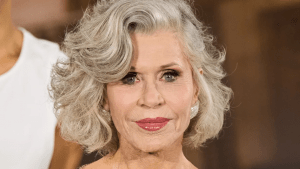


At 87 years old, legendary actress and activist Jane Fonda has relaunched the Committee for the First Amendment—a free speech organization her father Henry Fonda founded in 1947 to fight McCarthyism. The new committee announced its revival in October 2025 with support from over 550 Hollywood figures including Whoopi Goldberg, Barbra Streisand, Pedro Pascal, Billie Eilish, and Spike Lee. Fonda calls this “the most frightening moment of my life” as she warns about threats to constitutional rights.
The original committee was created during the McCarthy Era when the federal government persecuted citizens for their political beliefs, leading to the blacklisting of the Hollywood Ten and hundreds of others in the entertainment industry. Today’s revival aims to defend free speech and expression against what the committee describes as coordinated government efforts to silence critics.
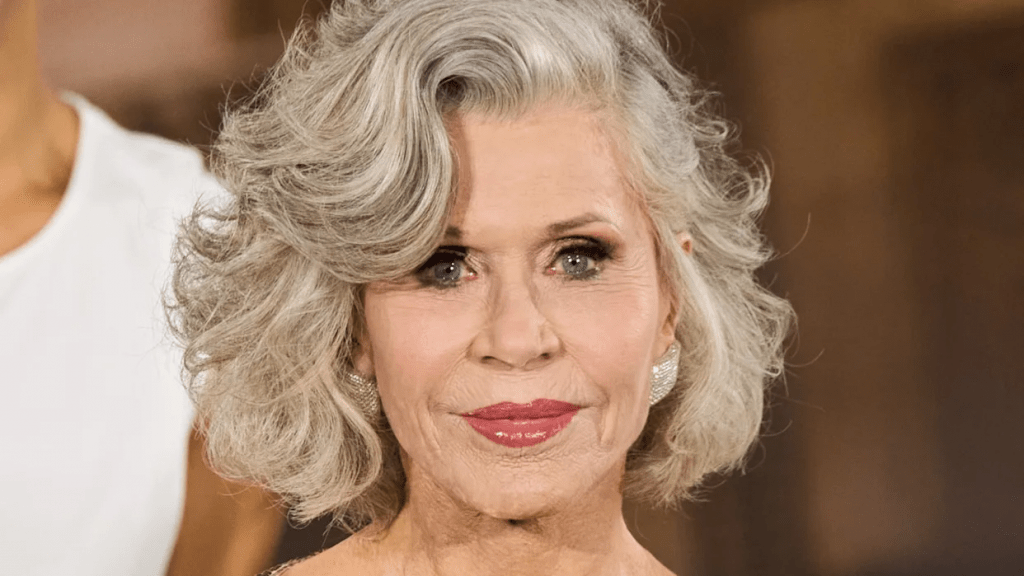
Jane Fonda Revives Her Dad’s 1947 Free Speech Movement—Here’s What You Need to Know
In a powerful moment that connects past and present, Jane Fonda announced she has relaunched the Committee for the First Amendment—the same organization her legendary father Henry Fonda helped create nearly 80 years ago during America’s darkest days of political repression.
The 87-year-old Oscar-winning actress made the announcement in October 2025, bringing together more than 550 entertainment industry figures who signed their names to a joint statement defending constitutional rights. This isn’t just another celebrity cause—it’s a direct response to what Fonda and her supporters see as serious threats to freedom of speech and expression in America today.
“I’m 87 years old. I’ve seen war, repression, protest, and backlash. I’ve been celebrated, and I’ve been branded an enemy of the state,” Fonda wrote in her letter to fellow artists. “But I can tell you this: this is the most frightening moment of my life.”
Those are strong words from someone who has lived through Vietnam War protests, been arrested multiple times, and faced death threats for her activism. When Jane Fonda says she’s frightened, people listen.
Also read Luke Combs At Notre Dame : 80K‑Fan Stadium Show With Dierks Bentley & Opener Times.
What Was the Original Committee for the First Amendment?
To understand why this revival matters, we need to go back to 1947—a time when fear gripped Hollywood and America
.
The McCarthy Era: When Fear Ruled Hollywood
The original Committee for the First Amendment was formed in September 1947 by screenwriter Philip Dunne, actress Myrna Loy, and film directors John Huston and William Wyler. They created it to support fellow entertainment workers who were being targeted by the House Un-American Activities Committee (HUAC).
HUAC was on a mission to root out supposed communist influence in Hollywood. The committee began subpoenaing screenwriters, directors, and other movie professionals to testify about their Communist Party membership or associations. The famous—or infamous—question they asked was: “Are you now or have you ever been a member of the Communist Party of the United States?”
This wasn’t just a political inquiry. Careers were destroyed. Lives were ruined. People went to prison.
The Hollywood Ten: Taking a Stand
Ten Hollywood professionals refused to answer HUAC’s questions, citing First Amendment protections for freedom of speech and assembly. They believed the government had no right to police their political beliefs or associations.
These men—screenwriters and directors including Dalton Trumbo, Ring Lardner Jr., and Edward Dmytryk—became known as the Hollywood Ten. On November 24, 1947, Congress cited them for contempt. They were convicted, fined $1,000 each, and sent to prison for six months to a year.
But the punishment didn’t stop there. The major Hollywood studios issued the Waldorf Statement, publicly announcing they would not employ anyone with Communist ties. This created the Hollywood Blacklist—a systematic barring of suspected communists from working in the entertainment industry.
Who Stood Up? Famous Names You’d Recognize
Henry Fonda joined the Committee for the First Amendment alongside some of the biggest stars of that era:
- Humphrey Bogart and Lauren Bacall
- Lucille Ball
- Frank Sinatra
- Judy Garland
- Gene Kelly
- Katharine Hepburn
- Bette Davis
- Groucho Marx
On October 27, 1947, members of the group flew to Washington, D.C., to protest the HUAC hearings. They even created radio broadcasts called “Hollywood Fights Back” on ABC Radio, where members voiced their opposition to the government’s actions.
The Backlash Was Swift and Brutal
Unfortunately, the committee’s good intentions backfired. The California state legislature branded the Committee as a Communist front organization. When it came out that some of the Hollywood Ten had actually been Communist Party members at various points, committee members like Bogart felt betrayed.
Humphrey Bogart later wrote an article titled “I’m No Communist” to distance himself from the group. Even being associated with the committee became dangerous—many members, including Henry Fonda, Lena Horne, and Melvyn Douglas, were “graylisted”, meaning they weren’t officially blacklisted but struggled to find work.
The committee had a short and troubled history, but its message about protecting free speech never died.
Why Jane Fonda Decided to Bring It Back Now
Fast forward to October 2025. Jane Fonda sees disturbing parallels between her father’s era and today.
“The Federal Government Is Silencing Critics Again”
The Committee’s new statement declares: “The federal government is once again engaged in a coordinated campaign to silence critics in the government, the media, the judiciary, academia, and the entertainment industry. We refuse to stand by and let that happen.”
This announcement came shortly after ABC briefly suspended late-night host Jimmy Kimmel’s show following criticism from government officials about his on-air comments regarding a conservative activist’s assassination. The incident raised alarm bells about government pressure on media outlets.
Fonda’s Personal Connection Makes This Fight Different
This isn’t just political for Jane Fonda—it’s deeply personal. Her father was part of the original fight. She’s watched history repeat itself.
In an interview with CNN’s Dana Bash, Fonda explained her motivation: “When I feel scared, I look to history. I wish there were a secret playbook with all the answers—but there never has been. The only thing that has ever worked—time and time again—is solidarity: binding together, finding bravery in numbers too big to ignore, and standing up for one another.”
She’s not just invoking her father’s legacy—she’s continuing the family tradition of standing up when it matters most.
Who’s Standing With Jane Fonda? The Celebrity Support Is Massive
More than 550 entertainment industry figures have signed onto the committee’s mission statement. This isn’t a small group of activists—it’s a who’s-who of Hollywood spanning generations and genres.
The Star-Studded List Includes:
| Actors | Filmmakers | Musicians | Writers |
|---|---|---|---|
| Whoopi Goldberg | Spike Lee | Billie Eilish | Aaron Sorkin |
| Pedro Pascal | Barry Jenkins | John Legend | Julia Louis-Dreyfus |
| Viola Davis | J.J. Abrams | Janelle Monáe | Judd Apatow |
| Ben Stiller | Ethan Hawke | Barbra Streisand | Damon Lindelof |
| Natalie Portman | Rob Reiner | Gracie Abrams | Larry David |
| Sean Penn | Celine Song | ||
| Florence Pugh | |||
| Kerry Washington | |||
| Julianne Moore | |||
| Nicolas Cage | |||
| Michael Keaton | |||
| Anne Hathaway | |||
| Quinta Brunson | |||
| Rosie O’Donnell | |||
| Winona Ryder |
The full list represents a cross-section of the entertainment industry, from veterans like Barbra Streisand to younger stars like Billie Eilish. This generational diversity shows the issue transcends age and political eras.
What Makes This Coalition Different
Unlike many celebrity causes, this one specifically focuses on a constitutional right that affects everyone—regardless of political beliefs.
The committee’s statement emphasizes: “Free speech and free expression are the inalienable rights of every American of all backgrounds and political beliefs—no matter how liberal or conservative you may be. The ability to criticize, question, protest, and even mock those in power is foundational to what America has always aspired to be.”
This isn’t about left versus right. It’s about protecting fundamental freedoms.
Jane Fonda’s Lifetime of Activism: From Vietnam to Climate Change
To understand why Fonda’s voice carries weight on this issue, you need to know her history. She’s been fighting for causes her entire adult life—sometimes at tremendous personal cost.
The Vietnam War: Her Most Controversial Stand
Jane Fonda became one of the most visible opponents of the Vietnam War in the late 1960s and early 1970s. She didn’t just speak out—she took action that made headlines and sparked outrage.
In 1970, she was arrested on suspicion of drug trafficking while returning from an anti-war speaking tour in Canada. Her mugshot, showing her raising a defiant fist, became an iconic image of 1960s rebellion.
But it was her 1972 trip to North Vietnam that changed everything. Fonda toured North Vietnam during the war, broadcasting anti-war messages over North Vietnamese radio. She urged American pilots to reconsider their role in the conflict and visited bombed areas to witness the destruction firsthand.
The most controversial moment came when she was photographed sitting on a North Vietnamese anti-aircraft gun, earning her the nickname “Hanoi Jane” that still follows her today. Many veterans and their families felt betrayed. She faced accusations of treason and received death threats.
Fonda has repeatedly apologized for that photo, calling it “a betrayal” and “the largest lapse of judgment that I can even imagine.” However, she maintains she has no regrets about her anti-war activism itself—only about that specific image being used as propaganda.
Fighting for Civil Rights and Indigenous Peoples
Before Vietnam dominated her activism, Fonda supported the Civil Rights Movement and the Black Panthers in the 1960s and early 1970s. She held fundraisers in her home for the Black Panthers and campaigned for activists like Angela Davis, whom she visited in prison in 1971.
She also championed Native American causes, supporting the Occupation of Alcatraz Island from 1969 to 1971 and helping negotiate rights for Native groups occupying Fort Lawton in Seattle in 1970.
Climate Activism: Her Current Mission
In recent years, Fonda has channeled her energy into fighting climate change. Inspired by Greta Thunberg and author Naomi Klein, she launched “Fire Drill Fridays” in 2019—weekly protests on the steps of the U.S. Capitol designed to raise awareness about the climate crisis.
She was arrested five times during these protests in 2019, even spending her 82nd birthday night in jail. The last time before that she’d spent the night in jail was in 1970 during her Vietnam War protests—49 years earlier.
She founded the Jane Fonda Climate PAC in 2022 to help elect “climate champions” at all levels of government. She’s protested the Dakota Access Pipeline and fought for fossil fuel industry accountability.
A Pattern of Standing Up
Throughout her life, Fonda has shown a willingness to risk her reputation, her safety, and her career for causes she believes in. Whether you agree with her politics or not, her commitment to activism is undeniable.
She co-founded the Hollywood Women’s Political Committee in 1984 to empower women in politics and the Women’s Media Center in 2005 to amplify women’s voices in media.
This isn’t someone who jumps on trends. This is someone who has spent decades putting her money, time, and freedom where her mouth is.
The Government’s Response: “Hanoi Jane” Resurfaces
The revival of the Committee for the First Amendment didn’t go unnoticed by government officials.
The White House responded by referring to Fonda as “Hanoi Jane” and stating that “President Trump is a strong supporter of free speech.” Spokesperson Abigail Jackson added that Fonda “is free to share whatever bad opinions she wants.”
This response demonstrates exactly what the committee warns about—using someone’s past to discredit their current message about constitutional rights. The “Hanoi Jane” nickname from 1972 is being weaponized 53 years later to dismiss legitimate concerns about free speech.
In an interview with Democracy Now!, Fonda explained her sense of urgency: “Authoritarians, I’m learning, take about 18 to 22 months to consolidate power.”
She’s not talking in vague terms. She’s warning about a specific timeline based on research into how authoritarian movements gain control.
What Does the Committee Actually Want to Do?
The relaunched Committee for the First Amendment isn’t just making statements—they have specific goals.
Their Core Mission
The committee’s statement outlines their purpose:
- Defend Constitutional Rights: Protect the First Amendment rights of all Americans regardless of political affiliation
- Stand Against Censorship: Oppose government efforts to silence critics in media, academia, government, and entertainment
- Build Solidarity: Create a “united front” of artists and citizens who refuse to be intimidated
- Speak Truth to Power: Exercise the right to “criticize, question, protest, and even mock those in power”
What Signing the Statement Means
Fonda made clear in her letter that signing the statement “does not commit you to anything other than the values espoused in the statement.” It’s a declaration of principles, not a binding contract.
But she also emphasized this is just the beginning: “Speaking out together is our foundation—and the principle we will return to as we shape what comes next.”
The Stakes Are Personal
The committee’s message includes a powerful warning for those who remain silent: And to those who profit from our work while threatening the livelihoods of everyday working people, bowing to government censorship, and cowering to brute intimidation: we see you and history will not forget.”
They’re calling out not just government officials, but also corporate leaders and media executives who they believe are capitulating to pressure rather than defending free expression.
Why This Matters Beyond Hollywood
You might be thinking: “This is just celebrities making noise. How does it affect me?”
Here’s why this actually matters to everyone:
Free Speech Protects Everyone—Not Just the Rich and Famous
When the government can silence celebrities with massive platforms and legal resources, ordinary citizens are even more vulnerable. If Whoopi Goldberg and Spike Lee are worried about their ability to speak freely, what chance does the average person have?
The First Amendment doesn’t just protect popular speech—it specifically protects unpopular, controversial, and challenging speech. That’s what makes it foundational to democracy.
History Shows What Happens When We Don’t Speak Up
The McCarthy Era destroyed hundreds of careers and silenced countless voices. People were imprisoned for their political beliefs. Families were torn apart. The entertainment industry was permanently changed by fear.
It took decades for the Hollywood Blacklist to fully end. Dalton Trumbo, one of the Hollywood Ten, didn’t publicly write under his own name again until 1960—13 years after being blacklisted.
We can’t afford to let that happen again.
The Power of Collective Action
Fonda emphasized in her letter: “They’re betting on our fear and our silence. But our industry—and artists around the world—have a long history of refusing to be silenced, even in the darkest times.”
When 550+ people stand together, it’s harder to dismiss their concerns. When they represent different generations, political views, and backgrounds, their message carries more weight.
What Can Regular People Do?
You don’t need to be a celebrity to support free speech. Here’s how you can get involved:
Educate Yourself on First Amendment Rights
Understanding your constitutional rights is the first step to protecting them. The First Amendment protects:
- Freedom of speech
- Freedom of the press
- Freedom of religion
- Freedom of assembly
- The right to petition the government
These aren’t just abstract concepts—they’re practical protections you use every day.
Support Organizations Fighting for Free Speech
Many groups work to protect First Amendment rights:
- American Civil Liberties Union (ACLU)
- Electronic Frontier Foundation (EFF)
- First Amendment Foundation
- Committee to Protect Journalists
Consider supporting organizations aligned with your values that actively defend free expression.
Speak Up When You See Censorship
Whether it’s in your workplace, your community, or online, don’t stay silent when you see attempts to suppress legitimate speech. You don’t have to be confrontational—sometimes simply asking “Why can’t this person express their view?” is enough.
Remember: This Isn’t About Left vs. Right
The committee specifically states this isn’t a partisan issue. Free speech protects conservatives and liberals, Democrats and Republicans, activists and corporations.
When you defend someone’s right to speak—even when you disagree with what they’re saying—you’re defending your own rights too.
The Lessons From 1947 That Apply Today
What can we learn from the original Committee for the First Amendment and its struggles?
Fear Can Make Us Silent
During the McCarthy Era, many people stayed quiet even when they saw injustice because they feared being targeted themselves. That silence allowed the persecution to continue.
Standing Together Makes Us Stronger
The original committee showed that when influential people band together, they can draw attention to important issues—even if they can’t immediately solve them.
The Fight for Rights Is Never Really Over
Jane Fonda’s decision to relaunch the committee proves that each generation must defend constitutional rights anew. Freedom isn’t guaranteed—it requires constant vigilance and courage.
Not Everyone Will Understand or Support You
The original committee members faced intense backlash, even from people who initially supported them. Humphrey Bogart and others were attacked as communist sympathizers. Some members saw their careers damaged.
But history has vindicated their concerns about government overreach and political persecution.
Final Thoughts: Why Jane Fonda’s Message Resonates
At 87 years old, Jane Fonda could be enjoying a quiet retirement. Instead, she’s putting herself back in the spotlight to fight for principles that matter.
Her statement cuts through the noise: “The stakes are too high, and silence is too costly.”
She’s lived through enough American history to recognize dangerous patterns. She’s experienced enough backlash to know the personal cost of speaking out. And she’s doing it anyway—because she believes the alternative is worse.
Whether you agree with Fonda’s politics or not, her willingness to revive her father’s legacy shows remarkable courage. The Committee for the First Amendment represents something bigger than any individual—it represents the ongoing struggle to protect the freedoms that define American democracy.
As Fonda wrote: “We still have our voices, each other, and the freedom to express ourselves. Let’s speak out before it’s too late.”
The question is: Will we listen?
For more information about the Committee for the First Amendment and how to support free speech initiatives, visit the Free Speech Center or the American Civil Liberties Union.
This article was researched using sources from CBS News, NPR, CNN, Variety, Deadline, NBC News, and historical archives about the McCarthy Era and Hollywood Blacklist.